Callisto: The Game
Knizia does Blokus and succeeds

Callisto: The Game
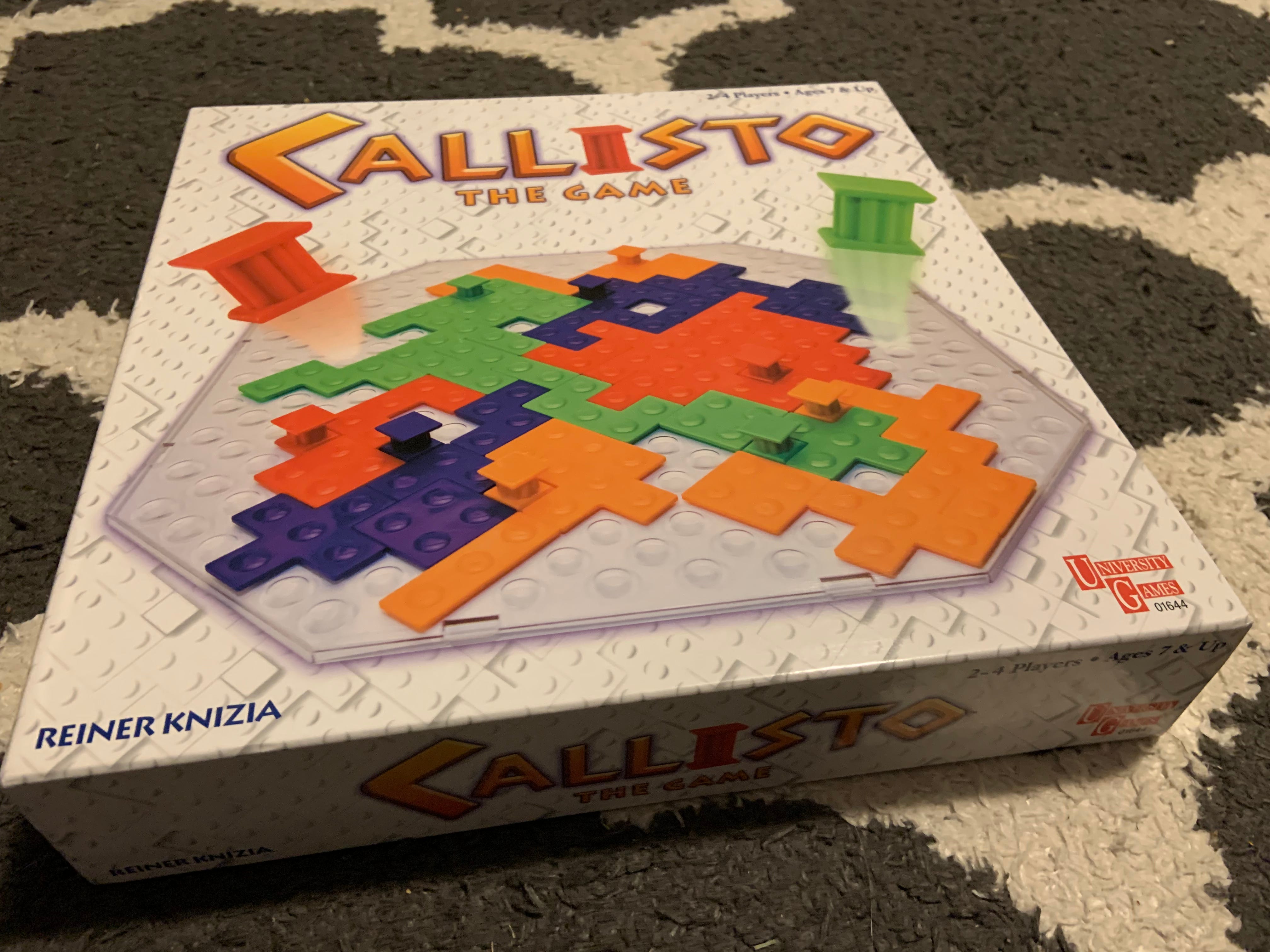
Designer: Reiner Knizia
Publisher: University Games (at least my copy is)
Type of game: Abstract and tile placement
Time: With two players, this can easily be played in under 15 minutes
Number of players: 2-4
Cost: Well, here’s the thing, I don’t think it’s currently in print at the moment. I got it at a consignment sale for about $5.
High level overview: Generally described as Knizia does Blokus, this game is a tile placement game in the same vein as Blokus but provides with some additional choices (and can be just as mean, if not meaner).
Pros: - Easy to learn, like super easy to learn
- Quick to play
- Allows players who really want to play with abstracted tiles a good outlet to play
Cons: - The components are meh which can be frustrating at times
- I’m not good at this game
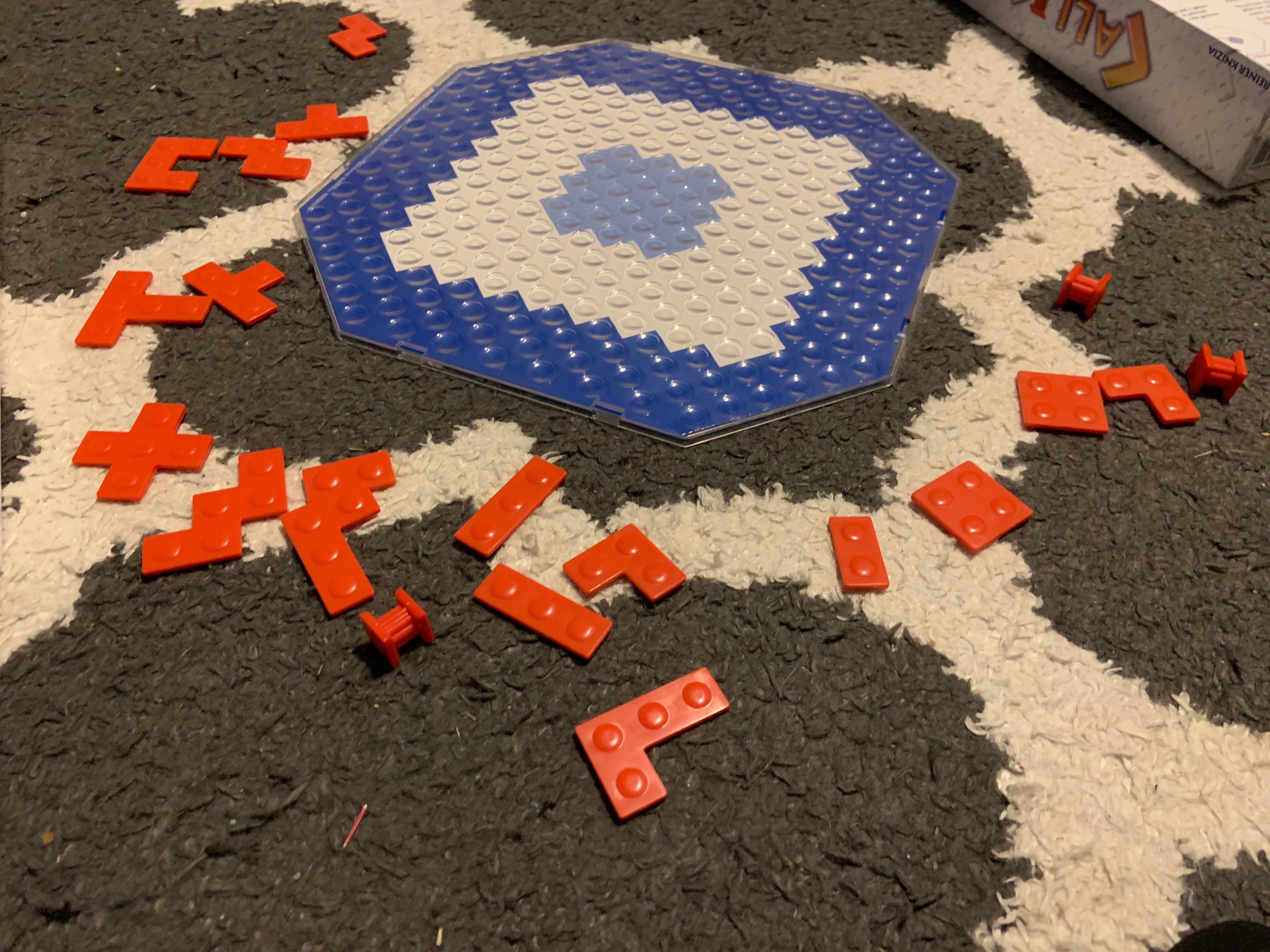
Rules/gameplay overview: You need to choose the outlay of the board for the number of players. Then you place it underneath the plastic gameboard. This plastic gameboard allows for the pieces to be placed without being moved. Each player chooses a color and takes all the pieces for that color. Then, in turn order, each player places a column of their own on the gameboard in a legal spot (not in the colored shape section). Each player places two columns out. Now you are ready to begin.
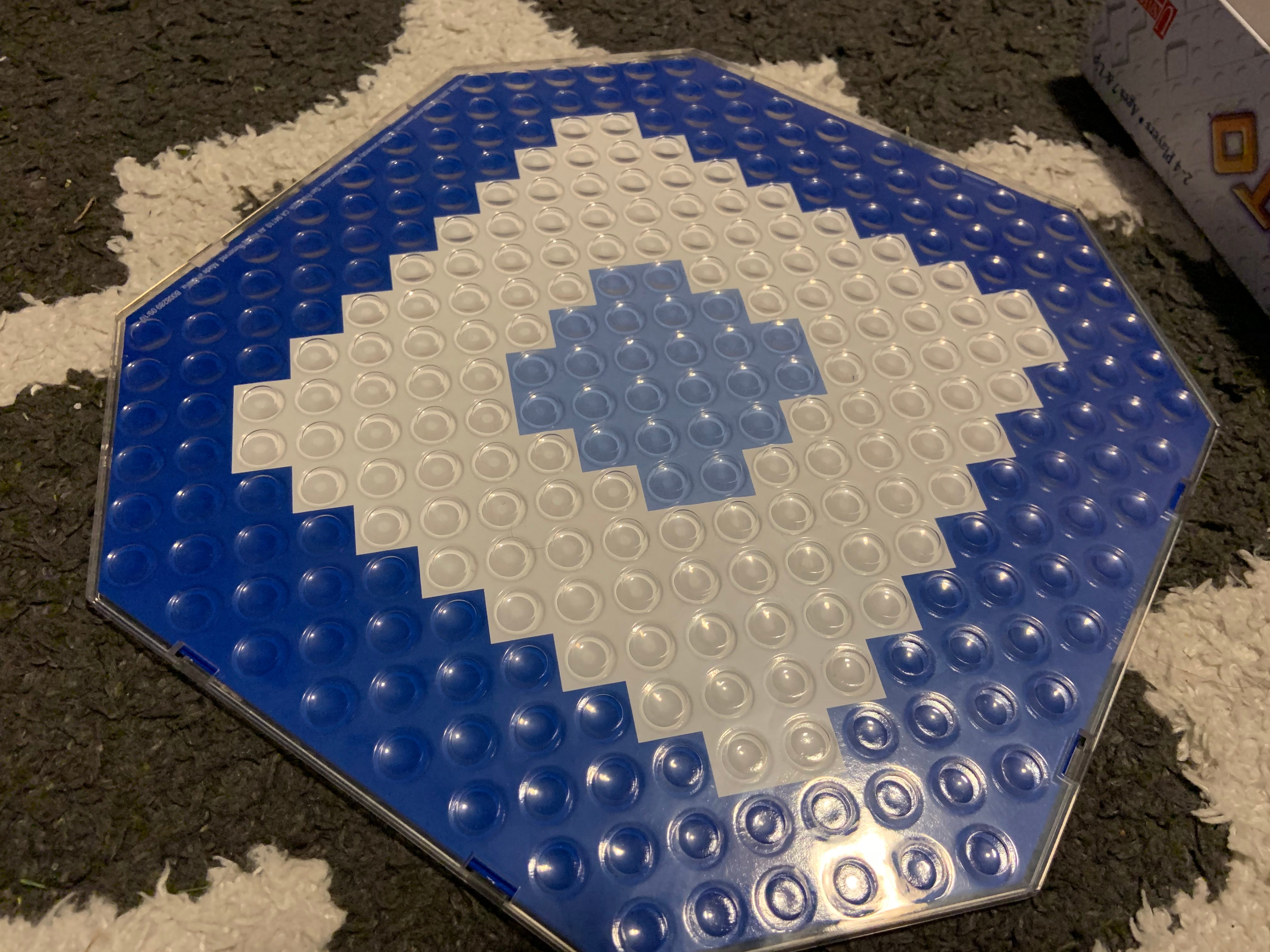
On your turn, you place one of your pieces on the gameboard (not the edges of the gameboard). You must place your piece so it is either touching one of your columns or one of your pieces on the board. Unlike Blokus, you must place it directly next to it and diagonal does not count. Once per game, you are allowed to place your third column instead of one of your pieces on the board. This allows you to build next to that third column.
Play continues in this way until the players can no longer play pieces on the board either because there are no spots left or no pieces left. The player who has the pieces with the fewest number of dots on their remaining pieces wins the game.
How does it feel: Confession time: I’ve only played this with 2 players. At the 2 player count, the playing area is a little smaller. It’s also pretty mean. Most of the pieces that you are placing on the board are placed with the idea of blocking your opponent. Honestly, most turns, I try to ask myself what it the place that is the most annoying for my opponent and then place the piece there. Although I mentioned that I’m not good at the game, my SO has confirmed that this is what she does, as well. It’s just that she’s better at it, than me.
This game does feel very similar to Blokus but with some important distinctions. (1) This game allows another choice in which you can place your column. So if you get stuck, you can play a third column down and theoretically have a chance to survive. (2) The Blokus board gives a greater advantage to a player who can picture how and where pieces fit on the board while being able to block your opponent. This game is a lot more reactive because it’s a smaller board especially with 2 players.
What that means is that a player who has trouble envisioning where pieces go, does not have as much of a disadvantage. I mean, don’t get me wrong, I lose this game quite a bit. But I’ve never beaten my SO at Blokus.
Recommended: All in all, I much prefer this game to Blokus. I think at 2 players the games are over very quickly. We play this game almost once per week because it only takes about 10 minutes to play. My SO, who loves Blokus, feels like this game does a good job of distilling it. I think if you have tried Blokus and felt disadvantaged because you can’t picture the pieces that well or are looking for a 2 player game that you can play quickly, this one might be worth checking out. That is, if it is in print.